

firstwriter.com's database of publishers includes details of 2,799 English language publishers that don't charge authors any fees for publishing their books. The database is continually updated: there have been 29 listings added or updated in the last month. With over a dozen different ways to narrow your search you can find the right publisher for your book, fast.
News
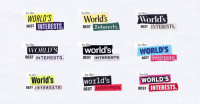
Leading UK magazine publishers have joined forces to champion the enduring value of print, in a campaign launched today (5 October).
Coordinated by the Professional Publishers Association (PPA), the campaign brings together nine publishers under the banner ‘Magazines. In the World’s Best Interests.’
It marks the first time in a decade that rival publishers have come together behind a single campaign, with the intention to promote retail magazine sales.
Those involved include Bauer Media, Future, Hearst UK, Immediate, Condé Nast, Anthem, Story House Egmont, New Scientist and DC Thomson, which are jointly funding the industry-wide collaboration.
The key campaign message invites readers to reclaim time for the things they love, whether it be film, music, fashion or cars, making the link between enjoying uninterrupted time with one’s passion and with magazines, which bring people together around the topics they care about.
KiN-TXT, a kinetic reading platform, is inviting applications from writers for an ongoing contributor roster and submissions for the first book it will publish.
The contributor call welcomes poetry, short fiction, essays, columns, reviews, criticism and reportage, including work on sport, arts, fashion and travel. New and experienced writers can apply with a link to published work or a portfolio, or paste a sample into the Writers Wanted form. The sample does not need to be finished. Contributor payment and publication-rights terms are not specified on the public page; writers should contact hello@kin-txt.com for details before committing work.
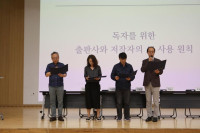
One of South Korea’s two major publishing organizations has announced a set of principles for the use of artificial intelligence (AI), seeking to address mass-produced books created with AI, often referred to as “click-to-publish” books.
The Korea Publisher Society said the principles aim to ensure that books remain trusted in the AI era by clearly defining human responsibility and roles throughout the publishing process. The organization said it will use the establishment of the principles as a starting point for further efforts to improve systems protecting the rights of authors and publishers.
The Korea Publisher Society held a publishing and AI policy forum at Mapo Central Library in Seoul on Tuesday, where it unveiled the “Principles for the Use of AI by Publishers and Authors for Readers,” consisting of five chapters and 20 articles. Eleven organizations, including the Korea Publisher Society, the Writers Association of Korea and the Critics Alliance, participated in drafting the principles.
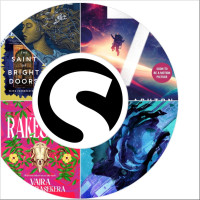
Profile Books has completed its acquisition of the SFF and horror imprint Solaris from 2000AD publisher Rebellion Publishing first announced back in June, for an undisclosed sum, taking over all turnover and e-book distribution.
Founded in 2007, Solaris was acquired by Rebellion in 2009, growing to publish 30 to 35 titles per year, with a focus on commercial genre fiction. New titles range from speculative fiction to mysterious folklore, supernatural horror and explosive space opera, offering something for every genre-loving reader.
Published authors include Katherine Addison (in the UK and Commonwealth), fantasy author and fashion historian Natania Barron, Vajra Chandrasekera, C.S.E. Cooney, R.T. Ester (author of The Ganymedan), Corry L. Lee, Emma Newman, MK Hardy, Ren Hutchings, Lavanya Lakshminarayan, Simon Jimenez and Rebecca Roanhorse (both also only in (in the UK and Commonwealth), RuNyx and Adrian Tchaikovsky.
Articles

If you’ve recently heard a collective intake of breath, it’s probably coming from a posse of publishers near you, bracing themselves for the deluge that’s coming. They know that those new year resolutions to get that novel published have been set in motion. Manuscripts have been retrieved from the dusty bowels of laptops and are being dispatched.
And in tandem with the arrival of the swallows, the rejection emails will start to wing their way into the inboxes of many of those hopeful writers. But if your life’s work is rejected, fear not. You are in the best of company, judging by a book I recently read. Rotten Rejections, by editor André Bernard, documents the in-house memos, letters and anecdotes involving the rejection of work by some very familiar names, including many Irish authors.
Back in 1895, poor WB Yeats was castigated for his offering, Poems. “I am relieved to find the critics shrink from saying that Mr Yeats will ever be a popular author,” huffed the person who received the submission – the book doesn’t cite the names of those who were so bold as to reject these titans of literature. “The work does not please the ear, nor kindle the imagination,” the publisher continued. “That he has any real paying audience I find hard to believe.”

As a new doctoral student at Cornell, Adam Szetela Ph.D. ’25 noticed an interesting trend in the book publishing world. Rather than criticism from people on the cultural right about the morals —or lack thereof — in current titles, authors and publishers were being slammed by folks on the cultural left, who were attacking books as racist or sexist, or questioning an author’s sensitivity.
“A lot of this is coming from a place of good faith,” Szetela said about the trend, which he writes about in “That Book Is Dangerous! How Moral Panic, Social Media, and the Culture Wars Are Remaking Publishing,” published Aug. 12 by the Massachusetts Institute of Technology Press and distributed by Penguin Random House. “But while the right is remaking the world in its image, the left is standing in a circular firing squad.”
Szetela said this new version of self-censorship is fueled by the vast reach of social media today.

Traditional book publishers. They were once known as the titans of the book publishing industry. In the Baby Boomer era, self-publishing was an unknown concept. You needed a traditional publisher if you wanted the best chance to succeed with your book.
During that time, there was significantly less competition for publishers and authors, meaning more book sales for both parties.
Over time, traditional publishers (especially The Big 5) gradually started to exploit authors by offering lower royalties and seizing the author’s publishing rights.

In 2021 author, poet and teacher Kate Clanchy gained an unwelcome new accolade: the award for the most liberal target of a cancellation yet. Clanchy’s much-celebrated Some Kids I Taught and What They Taught Me, about her experiences of teaching poetry to disadvantaged children around the UK, won the Orwell Prize in 2020. But a year later, thanks to a handful of the book’s sentences being shared out of context on social media, she found herself publicly shamed by today’s self-appointed moral guardians. She went from being applauded for bringing poetry to working-class children to being humiliated into accepting sensitivity-reader approved rewrites of her work.
It might be a new year but Clanchy’s punishment beating continues. It was announced last week that plans for a woke rewrite of Some Kids I Taught had been dropped – not because it was a God-awful idea to begin with, but because Clanchy and her publisher, Pan Macmillan, have decided to part company ‘by mutual agreement’.
The publisher’s statement notes: ‘Pan Macmillan will not publish new titles nor any updated editions from Kate Clanchy, and will revert the rights and cease distribution of Some Kids I Taught and What They Taught Me and her other works.’ This is an astonishing attempt by a publishing company to distance themselves from an author and her work.
Submit a listing
If you run, are involved in, or just know of a publisher not included in our publishers database, you can suggest a new listing by clicking here. You can also use this form for suggesting amendments to existing listings.
To view our inclusion policy, click here.